HOCKEY, MADE CLEAR / EMPTY NET
Do empty net goals count against goalie statistics?
No. An empty-net goal is not charged to the goalie who has left the ice. It counts in the team’s goals against and the scorer’s goals, while the absent goalie’s goals against and shots faced stay unchanged.
Start here
Keep the team score and the goalie’s personal record separate. The four boxes below follow one goal through those different records. Then the 58-minute example shows exactly which values belong in a goalie calculator.
ONE GOAL / DIFFERENT STAT LINES
Follow the goal, not just the scoreboard.
Illustrative situation: a team replaces its goalie with an extra skater. An opponent shoots into the unguarded net. Here is where that one event belongs.
Scoring team
+1 goal, +1 shot on goalThe puck entered the net.
Scorer
+1 goal, +1 shot on goalThe goal belongs in the scorer’s normal totals.
Conceding team
+1 goal againstThe team still conceded a goal.
Absent goalie
No added GA or shot againstThe goalie was off the ice.
Read the important distinction: a team shot on goal is not automatically a shot against a particular goalie. See what counts as a shot on goal before combining team and individual data.
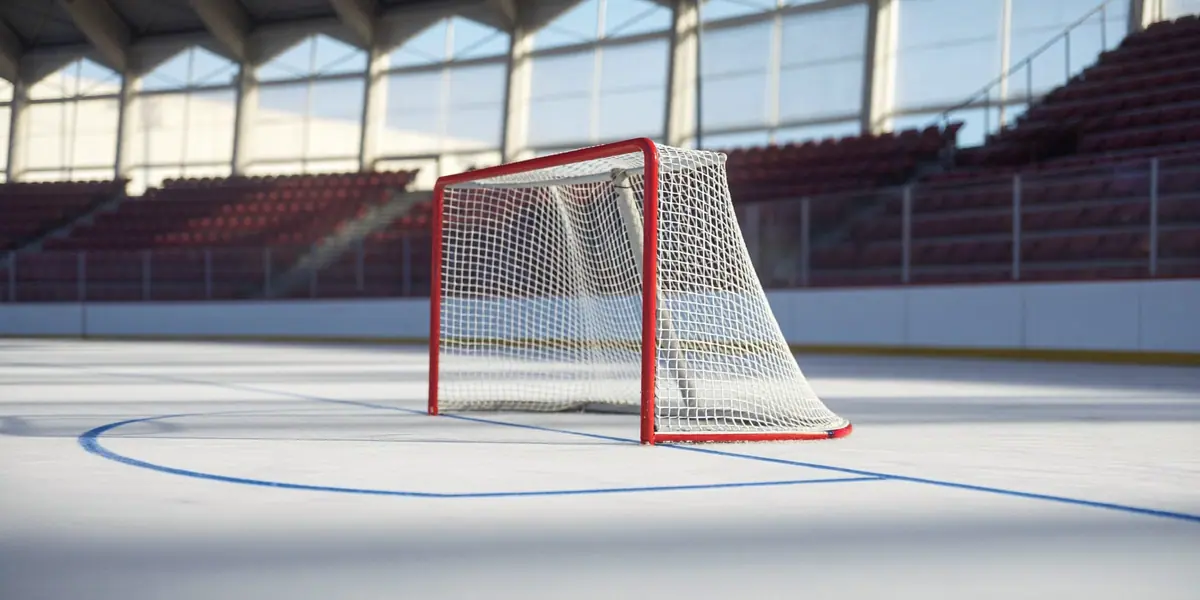
Why take the goalie out at all?
A team can replace its goalie with another skater to put an extra player into the attack. The trade-off is easy to see: there is another passing or shooting option at one end, but no goalie protecting the other net.
That explains why a late goal can change the final margin without changing the absent goalie’s goals against. It does not make the goal less real. The scorer still scored and the team still conceded; the individual goalie simply was not facing that shot.
Do not use the word “empty” as shorthand for an easy chance or a certain outcome. The term tells you about the goalie’s absence. A puck still has to enter the net for a goal to be recorded.
A 58-minute goalie example
Imagine a goalie plays 58:00, faces 30 shots, makes 28 saves and allows two goals. The team then keeps the goalie on the bench for the remaining two minutes and concedes one empty-net goal. There are no other goals or goalie appearances in this example.
2 with its goalie playing + 1 into the empty net.
28 saves in 58:00. The empty-net goal adds nothing to those counts.
GAA = 2 × 60 ÷ 58 = 2.07
The wrong shortcut is to put the team’s three goals into the goalie calculation. Another is to use a full 60 minutes when the goalie played 58. Try those inputs in the save percentage calculator and the GAA calculator with minutes and seconds.
These numbers are invented to show the arithmetic. For a real game, read the goalie’s own row and recorded ice time. If two goalies played, keep their individual totals separate before deciding what you want to calculate.
Does an empty-net goal affect plus/minus?
It can. Pulling a goalie does not itself create a penalty-based power play. For an empty-net goal with no power-play classification, the scoring team’s skaters on the ice receive +1 and the conceding team’s skaters receive -1. A goal classified as a power-play goal is excluded.
That means a skater can receive a minus for this event while the goalie on the bench receives no added goal against. Those statistics measure different things. Use the plus/minus situation explorer to compare an even-strength, power-play and short-handed goal.
Is six skaters against five always a power play?
No. Count the penalty situation as well as the players you see. An extra attacker replacing the goalie is a substitution. The same visible skater numbers can require different statistical treatment depending on penalties.
Three checks before using a box score
- Choose the right row. Team totals, individual goalie totals and empty-net records are different entries. Do not copy the final score into a goalie’s goals-against field.
- Match the time period. Use saves, shots and playing time from the same game or season. Our ice-time guide explains minutes:seconds and total playing time.
- Check how the game ended. A shootout adds one goal to the winning team’s final score through a different rule. Shootout attempts are not ordinary player goals.
A goalie skating outside the crease is not necessarily off the ice. The distinction here concerns an absent goalie replaced by another player, not merely an unguarded-looking net in a video frame. Use the official recorded totals when a play’s classification is unclear.
Why one late goal can change the way a result looks
Imagine a team leading 2-1 scores into an empty net and wins 3-1. The winning margin moves from one goal to two. That final margin is a team-result question; it should not be copied into the other goalie’s individual GA field.
For readers of legal gambling age whose next question concerns a goal-margin market, how puck-line margins are settled discusses why empty-net goals matter to the final margin. That is separate from the goalie-stat calculation here, and it does not make a late goal predictable.
Sources: Goalie Coaches on excluding empty-net goals from goalie shots, SV% and GAA; NHL definitions of goals and shots on goal; plus/minus definitions and references. Definitions checked 1 October 2026. The ledger and 58-minute calculation are illustrative, not a recorded NHL game.